
Packing for a house move is not just about putting everything into boxes.
Choosing the right packing materials can make a significant difference to how safely your belongings are transported. The right boxes, protective materials and labels can help prevent damage, make loading easier and save time when it is finally time to unpack.
Whether you are moving an apartment or a family home across the city, knowing what you actually need can help you avoid buying unnecessary materials or using the wrong ones.
Why Packing Materials Matter
It can be tempting to use whatever boxes and materials are available. Old supermarket boxes, plastic bags and random containers may seem like an easy solution.
However, weak boxes can collapse, overloaded boxes can become difficult to carry, and fragile items without proper protection are much more likely to be damaged during transport.
Good packing materials are not about making your move look organised. They are about protecting your belongings and making the entire moving process more efficient.
The Essential Packing Materials
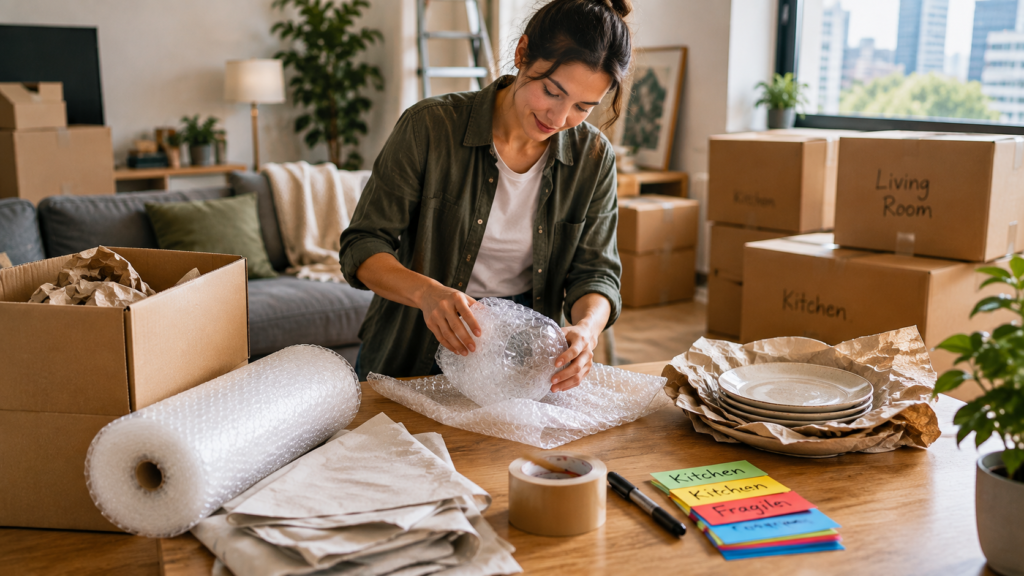
You do not need dozens of different products to prepare your home for a move. Most household moves can be handled with a few basic materials.
Moving Boxes
Boxes are the foundation of your packing process.
Small boxes are ideal for heavier items such as books, canned food and small appliances. Medium and large boxes are better suited to lighter belongings such as clothing, bedding and decorative items.
Avoid putting heavy objects into large boxes. A box that is too heavy becomes difficult to carry and can easily break during transportation.
Packing Tape
Good quality packing tape is essential for keeping boxes securely closed.
Use enough tape to properly seal the bottom and top of each box. Cheap or weak tape can come loose during handling, especially when boxes are stacked inside the truck.
Bubble Wrap and Packing Paper
Fragile items require additional protection.
Bubble wrap works particularly well for glassware, plates, electronics and other delicate objects. Packing paper can be used to wrap individual items and fill empty spaces inside boxes.
The goal is to prevent items from moving around during transport.
Labels and Markers
A simple label can save a surprising amount of time.
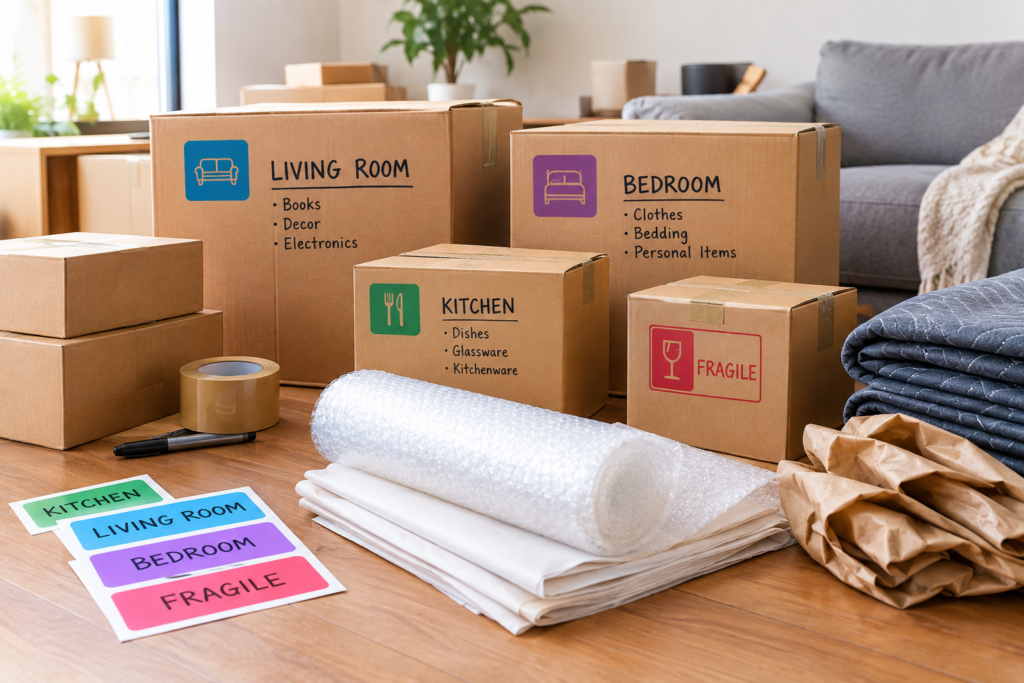
Each box should clearly identify:
- Destination room
• General contents
• Fragile items
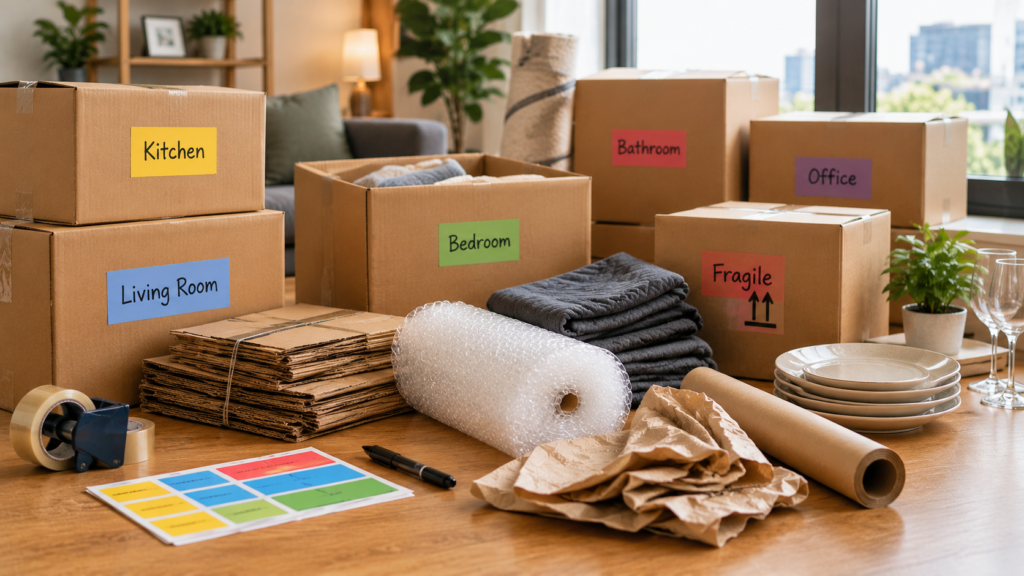
You can also use colour coded labels for different rooms. This makes it much easier to identify where each box should go when you arrive at your new home.
Choosing the Right Material for Each Item
Different belongings require different levels of protection.
Clothing: Medium or large boxes, suitcases or wardrobe boxes.
Books: Small, strong boxes to prevent excessive weight.
Kitchenware: Small or medium boxes with packing paper or bubble wrap.
Electronics: Original packaging when available, or sturdy boxes with protective material.
Glass and fragile decorations: Individual wrapping combined with additional padding.
Furniture: Protective blankets, covers and suitable wrapping materials.
Using the right material for each item helps reduce both damage and wasted space.
How Many Boxes Do You Need?
There is no exact number because every household is different.
A small studio apartment may require only a few dozen boxes, while a larger family home can require significantly more.
A useful approach is to start with an estimate based on the size of your home, then purchase or collect additional boxes as you progress.
It is better to have a small number of extra boxes than to discover on moving day that you have run out.
Common Packing Material Mistakes
Even with the right materials, some common mistakes can create problems.
Using Damaged Boxes
Old or weakened boxes may collapse when stacked or carried.
Overfilling Boxes
A box should be strong enough to carry its contents safely. If you struggle to lift it, it is probably too heavy.
Leaving Empty Space
Items can move around inside a box during transportation. Fill gaps with packing paper, towels or suitable protective material.
Using Too Much Material
Protection is important, but excessive wrapping can waste space and increase the number of boxes required.
The goal is to protect your belongings without making the move unnecessarily expensive or difficult.
Should You Buy Packing Materials or Use What You Have?
For some items, household materials can work perfectly well.
Towels, blankets and clothing can provide additional padding around certain belongings. Suitcases can also be useful for clothes and other personal items.
However, important or fragile belongings should be packed using appropriate materials whenever possible.
Professional packing services can also be an option for people who have limited time, large households or particularly valuable belongings.
Final Thoughts
The right packing materials can make your move safer, faster and much easier to manage.
You do not need to buy everything available. What matters is choosing suitable boxes, protecting fragile items properly, sealing everything securely and labelling your belongings clearly.
A well prepared move starts with the right materials.
And when everything arrives safely at your new home, you will be glad you took the time to pack it properly.